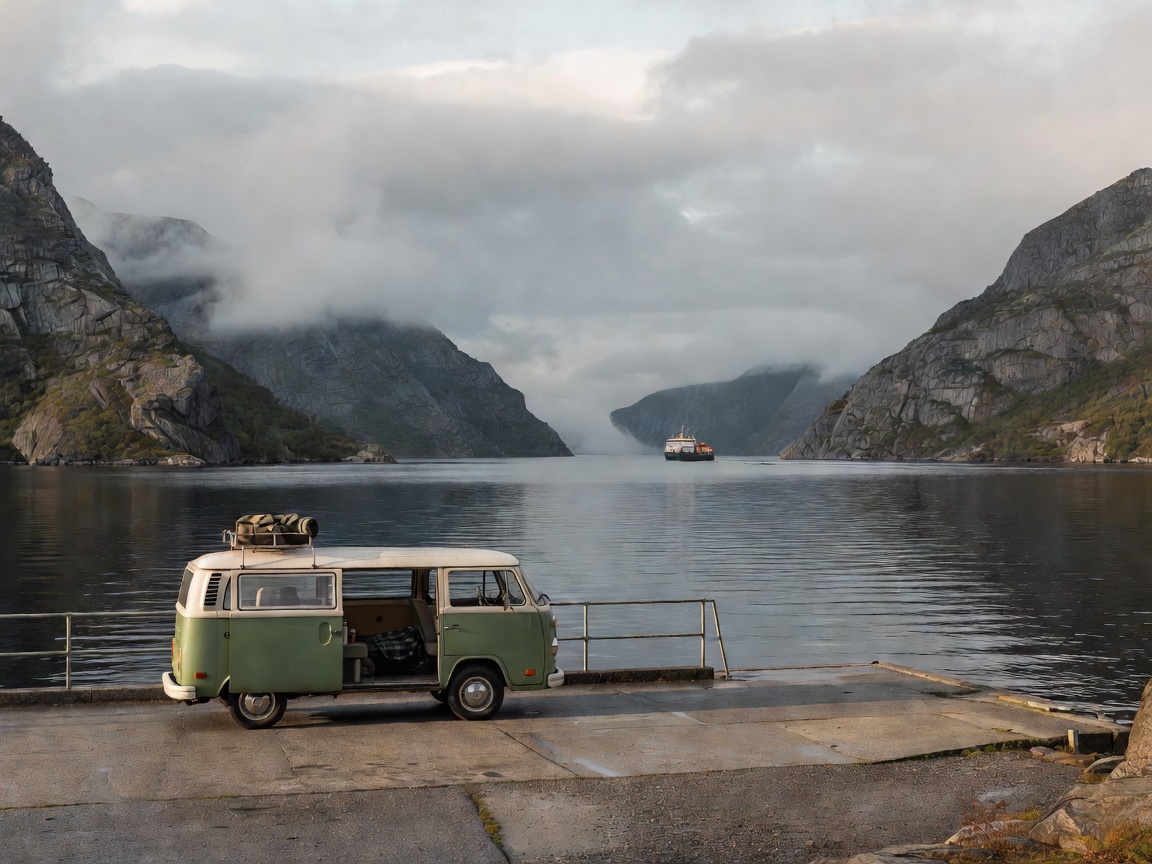
1. The Coastal Infrastructure
Coastal roads rarely follow straight lines. Fjord inlets force roads inland, dramatically increasing travel distances. Bridges and tunnels connect archipelagos. Transit routes prioritize speed. Scenic routes prioritize access.
Understand the difference. Primary European routes (E-roads) are built for freight and rapid transit. They feature wide lanes and gentle gradients. Regional coastal roads are narrower, lack central dividers, and feature sharp blind corners. Large campervans require caution on regional roads.
2. Ferry Logistics
Ferries are extensions of the road network. They are unavoidable on coastal routes. Pre-registration for automated toll systems is highly recommended. Unregistered vehicles face manual billing with heavy administrative surcharges.
Check vehicle length accurately. Prices scale sharply for vehicles over 6 meters. Include rear bike racks in the measurement. Arrive at terminals 30 minutes before departure during peak summer season. Turn off engines and propane systems while on deck.
3. Wind and Weather Exposure
Coastal weather is volatile. High-sided campervans are vulnerable to crosswinds. Suspension bridges often close to heavy vehicles during severe gales. Check official road status platforms daily.
Salt spray accelerates vehicle corrosion. Clean the windshield frequently. Park facing into the wind to minimize structural strain overnight. Ensure all roof vents and awnings are securely locked before driving coastal passes.
Coastal Route Checklist
- Measure exact vehicle length (including racks).
- Register for digital toll and ferry payment systems.
- Secure internal loose items against sudden braking.
- Verify bridge wind-restriction policies.
- Identify designated overnight parking areas.
4. Overnight Planning
Space is limited on narrow coastal strips. Do not park in passing places (designated with an "M" sign). These are strictly for traffic flow. Do not block agricultural access points or private residential driveways.
Designated rest areas restrict overnight stays. Some enforce 4-hour limits. Verify local municipal rules. Official campsites offer waste disposal and fresh water, which are scarce in remote coastal sectors.
5. Viewpoints and Roadside Stops
Scenic viewpoints offer dedicated parking. These fill rapidly in July and August. Arrive early or late in the day. Reverse into parking spaces to facilitate a safe exit into moving traffic.
Drive conservatively. Local traffic understands the road geometry. Use passing places to let faster vehicles overtake. Do not hold up commercial transport.