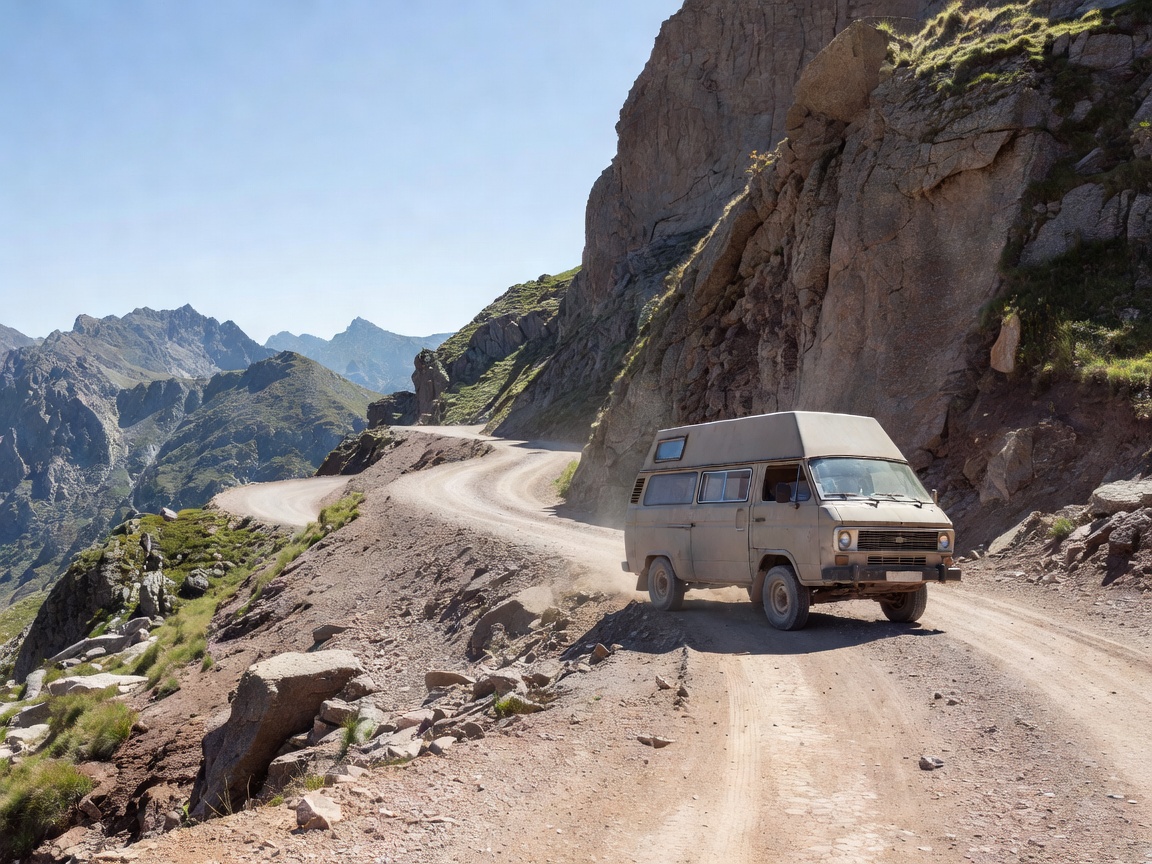
1. Gradients and Vehicle Dynamics
Mountain roads feature gradients exceeding 10%. Fully loaded campervans require precise gear management. Ascents demand lower gears to maintain momentum. Do not over-rev the engine.
Descents are critical. Riding the brake pedal will boil brake fluid and destroy pads. Engage low gears. Let engine braking control the descent speed. If brakes begin to smell, stop immediately in a safe location and allow them to cool.
2. Narrow Roads and Passing
Many mountain passes consist of a single lane with designated passing places. Ascending vehicles generally have priority, but practical common sense dictates that the vehicle closer to a passing space should yield.
Know the exact width and rear overhang of your campervan. Hairpin turns require wide entry angles. Check mirrors continuously. Yield to faster local traffic by pulling into passing places.
3. Weather and Altitude
Altitude decreases temperature rapidly. Summer temperatures at sea level do not guarantee frost-free conditions at 1,000 meters. Pack winter-grade clothing regardless of the month.
Fog and low cloud reduce visibility to near zero. Ensure fog lights function correctly. High winds across exposed plateaus destabilize large vehicles. If wind speeds exceed safe driving limits, park facing the wind and wait.
Mountain Route Checklist
- Verify brake pad thickness and fluid condition.
- Check total vehicle weight (do not exceed limits).
- Confirm winter tire requirements for specific passes.
- Identify alternative lower-elevation routes.
- Secure all internal loose items.
4. Seasonal Access and Closures
High mountain passes are not open year-round. Many remain closed due to snow until late May or early June. Early snow can force closures in September. Never assume a mountain road is open.
Check official national traffic authority websites before attempting any high-altitude route. Night closures are common in shoulder seasons when meltwater freezes into black ice.
5. Viewpoints and Parking
Mountain viewpoints offer dramatic scenery but limited parking. Larger vehicles should avoid stopping on the road edge outside of designated parking bays. Soft shoulders collapse easily under heavy axle loads.
Overnight stays at high altitudes require adequate heating. Propane efficiency drops in sub-zero temperatures. Ensure leisure batteries are fully charged before beginning an ascent.